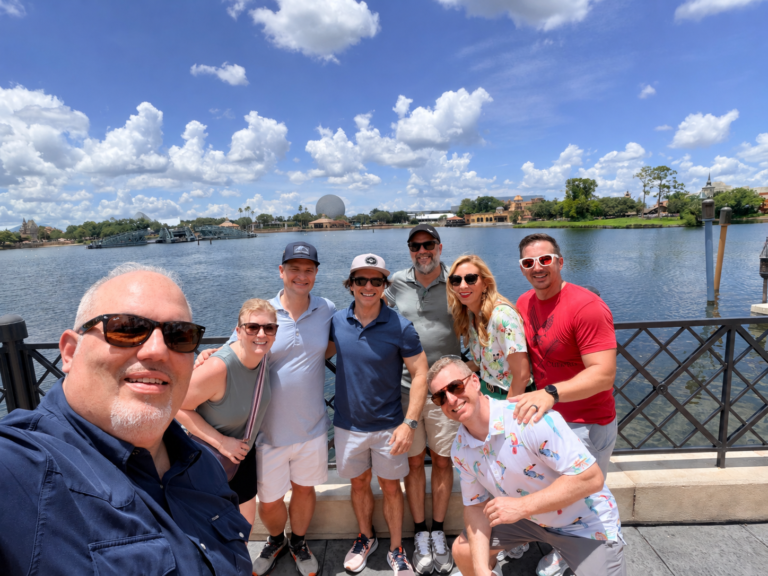
Saralyn Grass – Jacksonville Jaguars Sports and Culture Series: an evening of leadership lessons from Head Coach Liam Coen and General Manager James Gladstone.
There are evenings that remind you that the best leadership lessons don’t always come from the places you expect. I recently had the pleasure of attending the
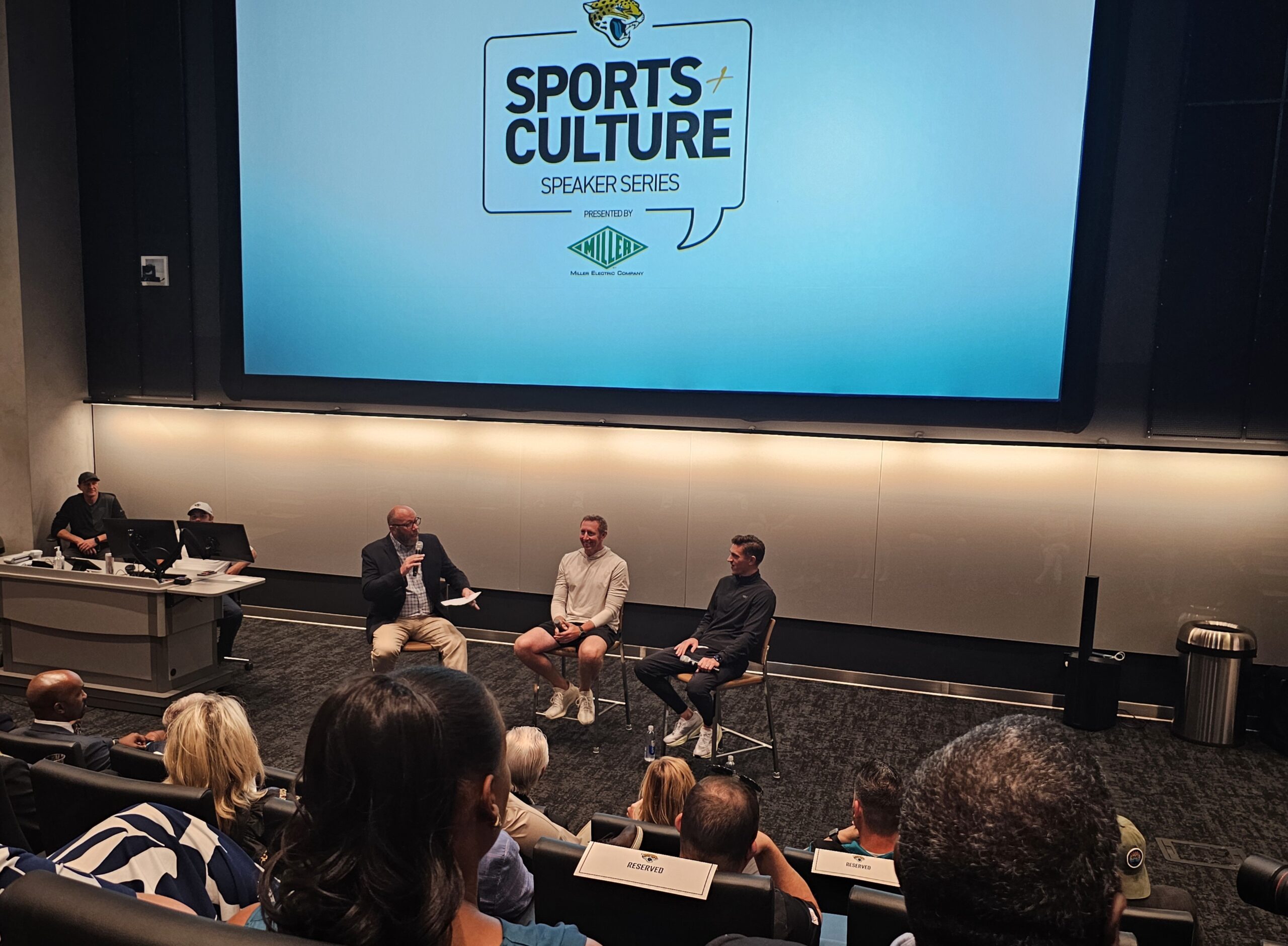
Jacksonville Jaguars‘ inaugural Sports and Culture speaker series alongside Gabe, Karen Bowling and Rachel Zimmer of WareWorks and several Northeast Florida movers & shakers, at the gracious invitation of Whitney Meyer, the Jaguars Foundation’s Chief Impact Officer. Emceed by JP Shadrick and held in the Jaguars’ team film room, the evening brought together community and business leaders from across Jacksonville for a candid conversation with Head Coach Liam Coen and General Manager James Gladstone. It was the kind of evening that earns its place in the calendar and the memory bank…especially when my family set their schedule to the Jaguars’ season every year since their first game!
Two Ideas That Deserve More Than a Moment’s Reflection
Two comments from the evening have stayed with me since. The first: Gladstone’s “Take more from failure than it takes from you.” The second: Coach Coen’s “Be demanding of your team but never demeaning.”
Both are worth unpacking beyond the moment they were delivered. The first speaks to something fundamental about how resilient organizations and resilient leaders are built. Failure is inevitable in any meaningful endeavor and the question is never whether it will happen but what you choose to extract from it when it does. Leaders and organizations willing to be genuinely honest about what went wrong, why it went wrong and what needs to change as a result are the ones that come out of difficult periods stronger and more capable. Those who treat failure primarily as something to manage or minimize tend to encounter the same problems under different circumstances.
The second speaks to a distinction that matters in every organizational context: the difference between accountability and contempt. Holding people to high standards communicates belief in their capacity to meet them. Demeaning people in pursuit of those standards communicates the opposite and gradually destroys the trust on which high performance actually depends. That line is one that leaders in every sector could benefit from examining honestly and regularly.
The C.L.E.A.T.S. Framework and the Practice of Presence
Coach Coen shared the C.L.E.A.T.S. framework that grounds his approach to the work: Commitment, Love, Energy, Authenticity, Toughness and Smart Thinking. At the center of it is a principle he described as being where your feet are, staying fully present to the moment and the people in front of you rather than being pulled toward what’s behind or ahead.
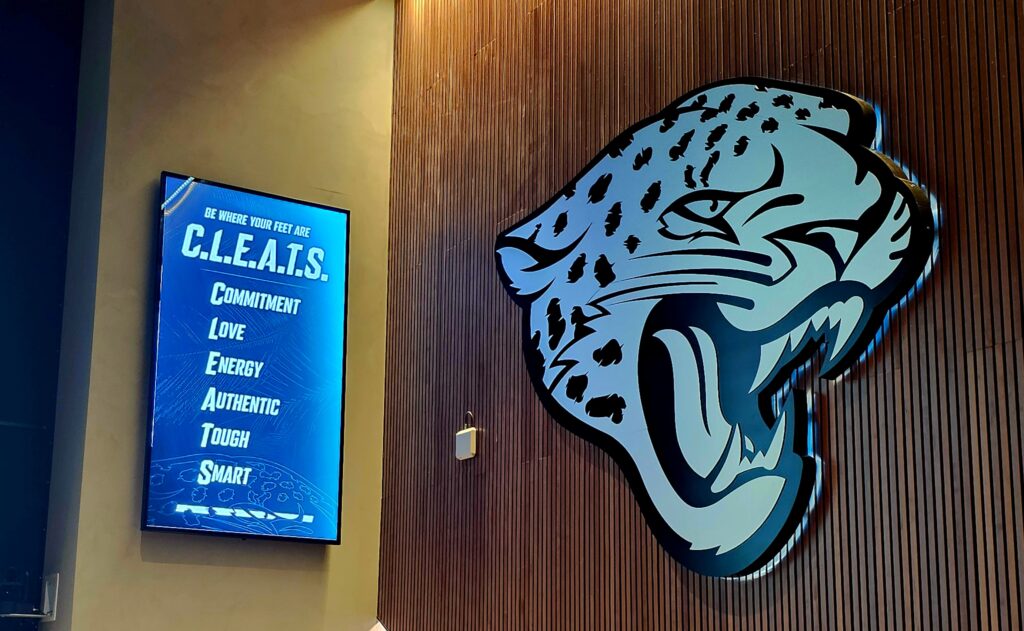
It’s deceptively simple advice and genuinely difficult to practice consistently, particularly for leaders managing complexity across multiple priorities and relationships. The organizational leaders Gabe and I work with most closely are almost universally stretched across competing demands and the discipline of bringing full presence to each context rather than partial attention to all of them is one of the more consequential leadership skills there is. It doesn’t show up on a resume or in a performance review framework. It shows up in the quality of relationships, the clarity of decisions and the trust that people extend to leaders who demonstrate it consistently over time.
Why These Principles Travel
As someone who spends much of my time working with nonprofits, community leaders and workforce development partners, what struck me most about the evening was how completely these principles translate across sectors. The specifics of building a professional football team are obviously different from building a high-performing nonprofit or a workforce development program. The underlying requirements of culture-building are not.
Whether you’re in a film room in Jacksonville or a boardroom anywhere else, culture is shaped by the expectations leaders set, the way they treat the people around them and their capacity to stay focused on the mission when circumstances make that difficult. Organizations that get those things right, that hold themselves to genuine accountability, that lead with authenticity and humility and treat adversity as information rather than indictment, tend to build the kind of sustained performance that outlasts any single season or funding cycle.
GM Gladstone’s perspective reinforced this from the roster-building side. The best teams, in any context, aren’t assembled purely on talent. They’re built on character, values and cultural alignment, on the recognition that how people work together ultimately determines more than what any individual contributes alone.
On Humility and Working Through Adversity Together
One of the threads that ran through the entire evening was the importance of humility in leadership, specifically the willingness to acknowledge mistakes openly, to invite honest feedback and to work collaboratively toward better outcomes rather than protecting the appearance of having gotten things right the first time.
That quality is rarer than it should be and more consequential than it’s often given credit for. Teams don’t follow performance systems. They follow people they trust and trust is built through consistent authenticity over time, through the willingness to be honest when something hasn’t worked and to bring people into the process of building something better. That’s as true in nonprofit governance as it is in professional sports and it’s one of the reasons evenings like this one are worth more than the hours they require.
A Note on Foye Oluokun
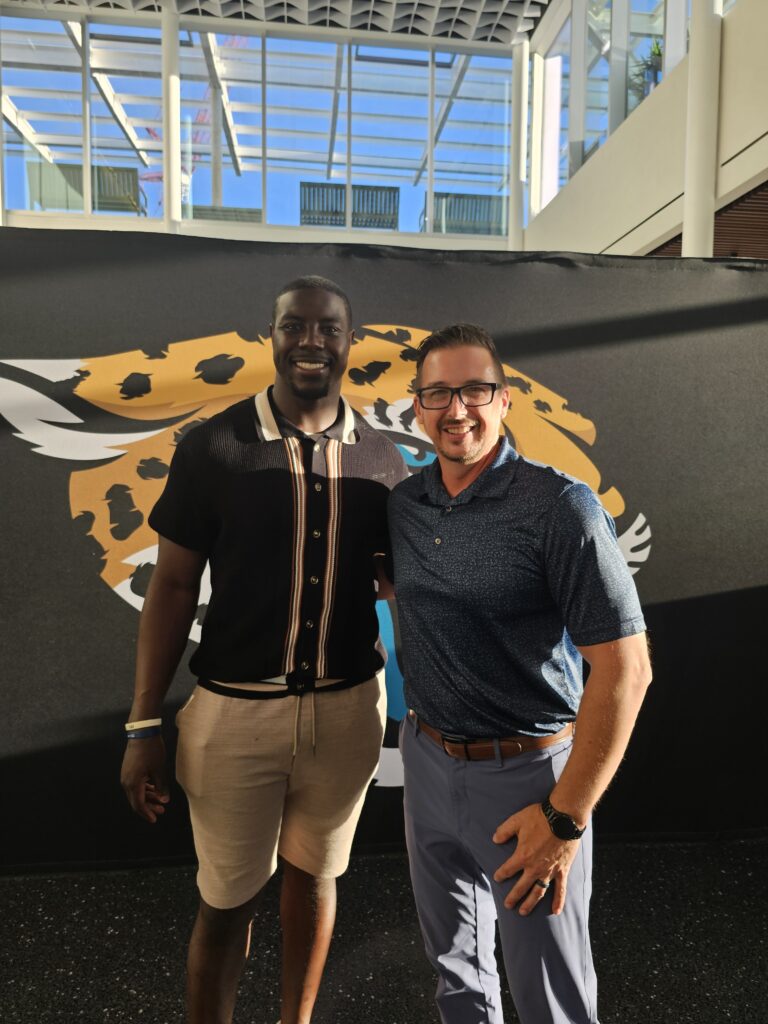
The evening closed with a sit-down dinner alongside Foye Oluokun, one of the Jaguars’ permanent team captains and a genuinely respected leader in the Jacksonville community…in addition to being one of the NFL’s leading tacklers every season. Spending time with someone who carries the values Coen and Gladstone had spent the evening articulating was a fitting close to the night. Oluokun’s quiet confidence and genuine warmth were immediately recognizable as the real thing and engaging with him directly reinforced everything that had been said about what authentic leadership looks like when it’s lived rather than described. Gabe even got the opportunity to snag a photo with the LB!
 A Note of Gratitude
The Jaguars Foundation’s decision to create a speaker series that connects the organization’s leadership to Jacksonville’s broader civic and business community in an intimate manner is a meaningful one. The room that evening was full of people who care deeply about this city and the conversations that unfolded across both the formal program and the dinner that followed are the kind that build relationships and shared perspective that move communities forward.
I’m grateful to Whitney Meyer for the invitation and for her vision in building programming that makes those connections real. We left more energized than we arrived and with a renewed appreciation for the universality of the principles underlying the best organizations in every sector.
Dr. Saralyn Grass is President and Co-Founder of Verdant Synergies Consulting, a Jacksonville-based strategic consulting firm. She brings more than two decades of experience in early childhood and K-12 policy, nonprofit leadership and expert witness testimony to her work with organizations and legal counsel across the country. Learn more at verdantsynergies.com.